





- Sleep and hydration are foundational — no food or supplement makes up for skipping either.
- Colourful fruits and vegetables and zinc-rich foods give your body key immune-supportive nutrients.
- Fermented foods and fibre support your gut, which plays a major role in overall immune function.
- Regular movement and stress management matter just as much as what's on your plate.
- Garlic, ginger, and adequate protein are easy, low-effort additions to meals you're already making.
- Small, consistent habits beat any single miracle food or supplement over the long run.
Fredericton winters test more than your patience for scraping windshields. Shorter days, colder air, and more time spent indoors all shift the way your body operates, and your immune system is no exception. The good news is that supporting it doesn't require anything drastic, just a handful of consistent, practical habits you can build into a normal week without turning your routine upside down.
None of this is about chasing a magic cure or living in fear of every cough on Queen Street. It's about giving your body what it needs to do its job well: sleep, movement, real food, and a little stress relief. Small, steady choices add up more than any single miracle ingredient ever could, and that's genuinely good news, because it means you don't need to be perfect to feel the benefit.
1. Prioritize Quality Sleep
Sleep is when your body does its quiet maintenance work, repairing tissue and regulating the hormones and systems that keep you feeling steady day to day. Skimping on it night after night leaves you running on empty, and that catches up with you faster than most people expect. Aim for a consistent bedtime, even on weekends, rather than trying to catch up later with a long weekend sleep-in.
If Fredericton's early winter darkness throws off your rhythm, try dimming screens an hour before bed and keeping your room cool and dark. A short wind-down routine, tea, a book, a few stretches, signals to your body that it's time to slow down. Consistency matters more than perfection here, so aim for a routine you can actually stick with most nights.
2. Stay Hydrated
It's easy to drink less water once the weather cools down and you're not sweating through summer heat, but your body still needs it just as much. Proper hydration supports circulation, digestion, and the mucous membranes that act as your body's first line of everyday defense. Keep a water bottle within reach and sip through the day rather than chugging it all at once.
If plain water feels boring, herbal tea or a smoothie with hydrating fruit like mango or pineapple can help you get there. A lot of our regulars pair a Mango Tango or Restore smoothie with their lunch specifically because it's an easy way to check that box without thinking too hard about it. Either way, the habit matters more than the exact source.
3. Eat the Rainbow
Colourful fruits and vegetables carry a wide range of vitamins, antioxidants, and fibre that support overall wellness, including the nutrients your immune system relies on. Citrus, bell peppers, berries, and leafy greens are all solid sources of vitamin C, which plays a well-documented role in normal immune function, alongside other antioxidants found across the produce aisle. Variety matters more than any single superfood, so aim for a mix of colours across the week rather than fixating on one item.
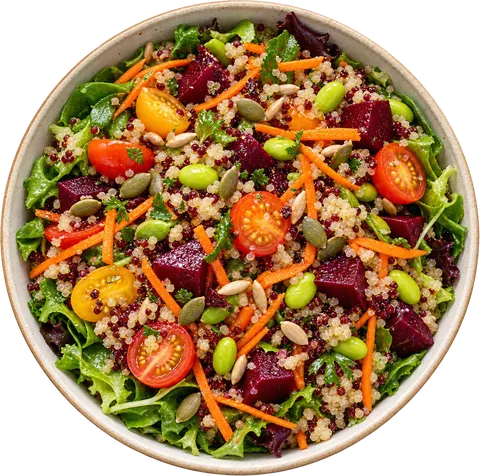
One of the easiest ways to get more colour on your plate is to build a meal around a big salad rather than treating vegetables as a side thought. Something like our Tie Dye or Roasted Root salad packs in several different vegetables in one sitting, which is a simple way to cover more nutritional bases without overthinking it or meal-planning in detail.
4. Feed Your Gut
A large portion of your immune activity is tied to your gut, so what you feed it matters more than people often realize, which is part of why gut health gets so much attention these days. Fermented foods like yogurt, kimchi, sauerkraut, and kombucha introduce beneficial bacteria that support a healthy gut environment. Fibre-rich foods matter too, since they help feed the good bacteria already living in your digestive tract.
You don't need to overhaul your diet overnight to see a difference in how you feel. Adding a spoonful of sauerkraut to a wrap or choosing a probiotic yogurt at breakfast is an easy starting point. Over time, small additions like this can shift your gut environment in a more supportive direction without much extra effort.
5. Load Up on Zinc-Rich Foods
Zinc is one of those minerals that doesn't get much attention until you're low on it, at which point it can affect everything from wound healing to your general resilience. Foods like pumpkin seeds, chickpeas, lentils, nuts, and lean meats are all reliable sources. It's worth building at least one zinc-rich food into your day most days of the week, especially through the colder months.
Chickpeas and pumpkin seeds are easy additions to a salad or wrap, and they add a satisfying crunch too. If you lean toward smoothies, a scoop of protein powder or hemp hearts can round things out, and both are options you can add to any smoothie on our menu when you're building your order.
6. Manage Stress
Chronic stress keeps your body in a heightened state that, over time, can wear down the systems responsible for keeping you feeling well, especially when it's layered on top of poor sleep or a skipped lunch. It's not about eliminating stress entirely, that's not realistic for anyone, but about building in ways to let your body come back down from it regularly. Even ten minutes of deliberate downtime a day can make a noticeable difference over a few weeks.
This looks different for everyone. For some people it's a walk along the river, for others it's journaling, breathing exercises, or just sitting somewhere quiet without a phone in hand. Find something small and repeatable rather than an elaborate practice you'll abandon in a week, and treat it as non-negotiable, not optional.
7. Move Your Body Daily
Regular movement supports circulation, helps regulate stress hormones, and is consistently linked to overall wellness, including a body that handles everyday pressures well. It doesn't need to be intense, a brisk walk, a bike ride along the trail, or a home workout all count toward the same goal. The goal is consistency, not heroics or a punishing schedule.
Winter can make this harder in Fredericton, but bundling up for a walk downtown or finding an indoor routine keeps the habit alive through the colder stretch. Movement also tends to improve sleep and mood, which loops back into supporting the other habits on this list in a fairly direct way.
8. Cook with Garlic and Ginger
Garlic and ginger have been kitchen staples for generations, and for good reason. Beyond their flavour, both contain compounds that researchers continue to study for their general health-supportive properties. Neither is a cure for anything, but both are easy, low-effort additions to meals you're already making most weeks.
If you want an easy way to work ginger into your routine, a ginger shot is a quick, no-fuss option, and we offer one as an add-on for exactly that reason. It's not a substitute for a balanced diet, just a small, convenient boost to a day that's already going in the right direction. Garlic, meanwhile, is easy to add to almost anything you're already cooking.
9. Get Enough Protein
Protein provides the building blocks your body uses to repair tissue and produce the proteins involved in immune function, so consistently under-eating it can leave you running on a deficit. Lean meats, eggs, legumes, nuts, and dairy are all solid sources, and most people can cover their needs without any special planning. Spreading protein across your meals, rather than loading it all into dinner, tends to work better for most people's energy and appetite.
A breakfast bagel with egg, a salad topped with grilled chicken or chickpeas, or a smoothie with a protein add-on are all straightforward ways to hit that mark without extra planning. The goal is just making sure protein shows up consistently across your day, not perfectly at every single meal.
10. Go Easy on Sugar and Alcohol
Excess added sugar and regular alcohol intake are both linked to disrupted sleep, inflammation, and a gut environment that's less supportive of overall wellness. Neither needs to be eliminated completely, that's rarely sustainable long-term, but keeping both in check makes a real difference over time. Read labels and notice how often extra sugar quietly shows up in your day.
Swapping a sugary afternoon snack for something like a smoothie with whole fruit and no added sugar is an easy trade that still feels like a treat rather than a sacrifice. Small substitutions like this add up faster than most people expect, without feeling like a restriction or a diet.
Where to Go From Here
None of these habits work in isolation, and none of them are a substitute for medical care when you actually need it. Think of them as the everyday foundation that supports how your body handles the normal ups and downs of a Fredericton winter, sleep, movement, real food, hydration, and a little stress relief, repeated consistently week after week rather than crammed into a single weekend of good intentions.
You don't have to overhaul your life this week. Pick one or two habits from this list, build them in gradually, and let the rest follow at its own pace. And if you need an easy place to start, a fresh salad or a smoothie with a few functional add-ons from The Squeeze is as good a first step as any.
Eat well in Fredericton.
The Squeeze is downtown Fredericton's spot for fresh, made-to-order smoothies built with real ingredients. Whether you're a smoothie regular looking for inspiration or someone just getting started, stop in or order ahead — we make it easy to eat well.
Order from The Squeeze